Why Survivors Keep Their Stories to Themselves
Oh, we all love true crime, right? At least I know I do.
I was scrolling through reels the other day when I came across a story about a teenage girl who opened the door for a man claiming he wanted to buy a house. He was shirtless, asking questions, and she trying, to be polite, told him her parents were out of town. He eventually left, and she went to pick up pizza for her siblings.
But when she returned home, everything had changed.
The man had somehow entered the house while she was gone and had tied up the two younger children inside. Moments later, the teenager herself was kidnapped.
As someone who was also kidnapped, I was curious to see what people were saying in the comments. What I found was disappointing but not surprising:
People were calling her “stupid.”
People were blaming the parents for leaving the kids at home.
People were blaming her for answering the door and then leaving to pick up pizza.
And there was even a comment saying that “in Black households, parents teach you not to answer the door,” as if that alone prevents violent crime.
And I want to pause here, because I grew up in a Black household. And my mother did teach me better. She told us never to open the door for anyone; not friends, not family, certainly not strangers. I was rarely ever home alone because she hated the thought of leaving me without supervision. I spent so much time at my grandmother’s house because of how protective my mom was.
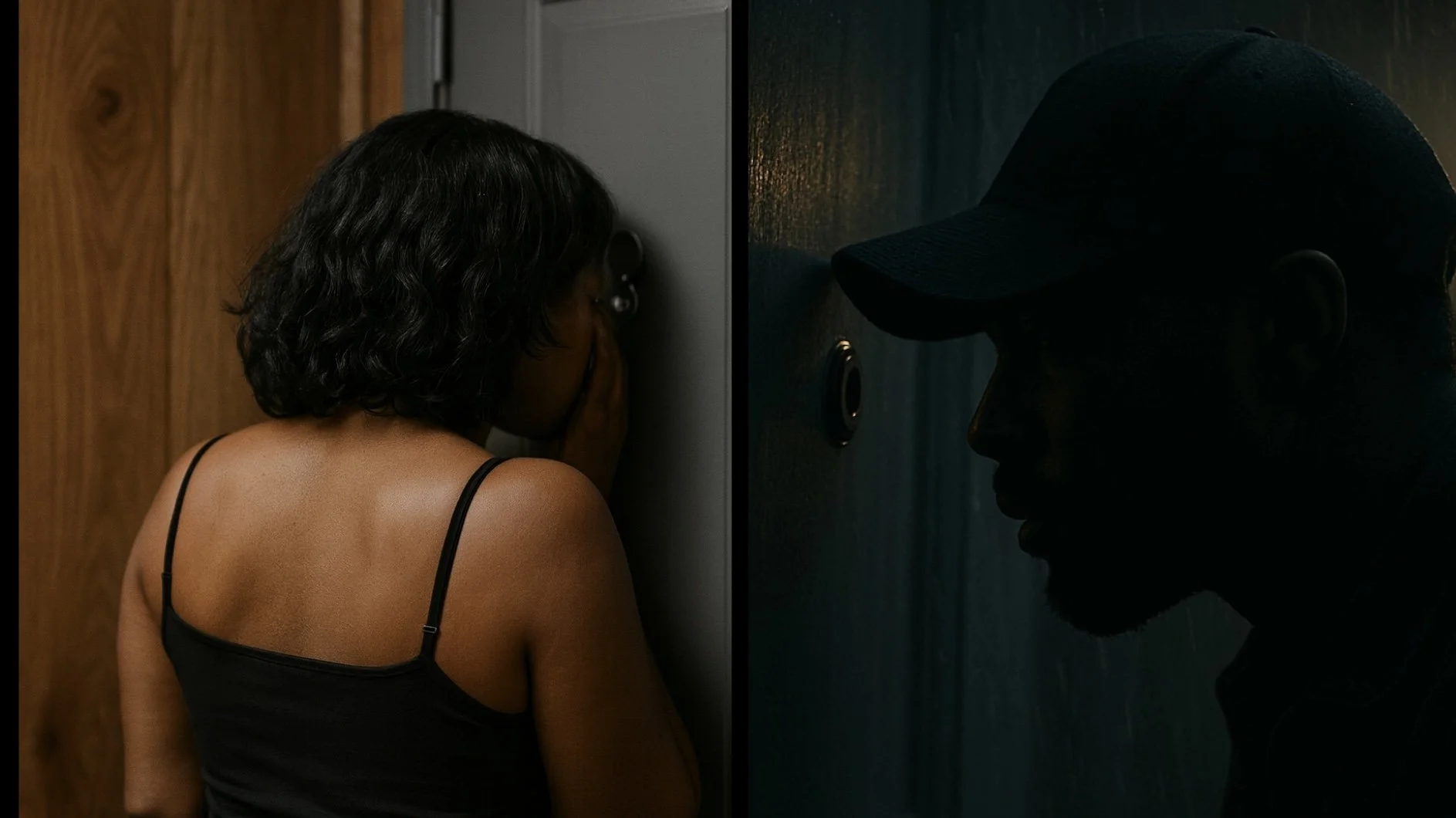
But one evening, when I was 14, I asked to stay home while she and my aunt went to the grocery store. I heard a knock, looked through the peephole, could not see who the person was, and I opened the door.
Yes. It was a mistake.
Yes. I blamed myself for years.
Yes. I carried deep shame for not listening, for making a choice that nearly cost me my life.
But here is the truth:
It was not my fault.
It wasn’t my mother’s fault for leaving me at home.
It wasn’t my aunt’s fault for introducing him to our family.
It wasn’t my fault for opening the door.
And beyond my own story, this is something every survivor needs to hear:
It is never the victim’s fault.
Not for what they were wearing.
Not for being polite.
Not for trusting someone they knew.
Not for walking alone.
Not for drinking.
Not for freezing up.
Not for fighting back.
Not for not fighting back.
Not for being a child.
Not for being vulnerable.
Not for making a mistake.
Not for wanting to help someone.
Not for being in the “wrong” place at the “wrong” time.
Not for answering the door.
Not for going to get pizza.
Not for going home.
Not for existing.
Violent crimes happen because someone chooses violence, not because of anything the victim did or did not do.
No outfit, no action, no personality trait, no place, no moment in time gives anyone the right to commit sexual violence. The person who chooses to harm is the only one responsible.
This is why victim-blaming is so damaging.
This is why survivors hesitate to disclose.
Because the world often focuses on what we did wrong instead of the person who chose violence.
No one should have to defend their choices as a child, a teenager, or an adult in order to be treated with compassion. The clothes we wear, the people we trust, the politeness we show, or the mistakes we make do not cause violent crimes.
So I share this for anyone who has ever kept their story quiet because they feared judgment, ridicule, or blame:
You are not at fault. You did what you needed to survive.
And sometimes, we keep our stories to ourselves because the comment section, both online and in real life, can be far more brutal than the truth we’re trying to speak.